
Three books. Simultaneously. (I know.)

Right now I am writing three books at once.
I know how that sounds. And I want to be clear before we go any further — I am not recommending this as a productivity strategy or a lifestyle choice. I’m not going to sell you a course called Triple Your Output or tell you that writing three books simultaneously is the secret to a thriving creative career.
It’s just where I am right now. And I’ve been thinking about how it actually works, because a lot of writers tell me they can barely focus on one project at a time — and I think the conversation about multiple projects is more nuanced than the writing world usually admits.
Here’s the debate I hear a lot in the writing world:
On one side: focus on one project at a time. Give it everything. Don’t dilute your creative energy across multiple stories or you’ll end up with three mediocre drafts instead of one finished book. Especially if you have limited writing time.
On the other side: creative energy doesn’t work like a finite resource. Different projects live in different parts of your brain. Sometimes working on one shakes something loose in another. Sometimes you need the distance from one story to see it clearly, and another story gives you that distance.
I’ve lived on both sides of this argument at different points in my writing life. Not that it’s even an argument (why do we frame everything as sides or right vs. wrong??). It’s actually just a different way of doing things and like our process itself, it can change at different points in our life.
Right now I’m firmly in the middle of these two viewpoints — literally — with three very different books demanding very different things from me.
Let me tell you what they are and how I’m actually moving between them.
The suspense novel.
This is new territory for me. After twenty cozy mysteries I’m writing something darker, more psychological, further from the world of cat cafes and amateur sleuths I’ve been living in for years. I’m super excited about it. I’ve already plotted it out once and I have 60K words done. And now I’m at the place where I have to go back to the beginning and work through some plot structure, figure out a few things I’m not clear on, and spend some time getting into the emotional muck of one of my main characters so her story is clear.
So I took it to a notebook instead of trying to just add word count every day. Here I can try to make sense of things without the pressure of feeling like I’m adding garbage to my manuscript. (By the way, all of these things are mind tricks.)
The notebook is low stakes. It’s where I think out loud. There’s no pressure to make it good because it’s not in the book— it’s the conversation I’m having with the book about the book, if that makes any sense at all.
The Harlequin Intrigue rewrite.
This one I follow when I feel pulled toward it. It’s the most alive project right now because it has a destination — specific submission guidelines, a clear vision of what it could be. I’m putting it out into the universe right now that they’re going to want the full manuscript. So I’m moving forward with the rewrite because that’s what professionals do. You don’t wait for permission to prepare. You just prepare.
The energy is there, so I use it when it shows up.
The memoir.
This one has a container. One dedicated session a week, tied to my Substack schedule — I share a raw vignette with paid subscribers every Thursday. That container does the work of protecting it. I don’t have to think about when I’m going to write it. I just know when it happens and I show up for it.
The container is everything. Without it the memoir would be the project that always gets bumped, because it’s the most personal and therefore the most frightening. The schedule removes the decision. I just show up on Thursday and write the next true thing.
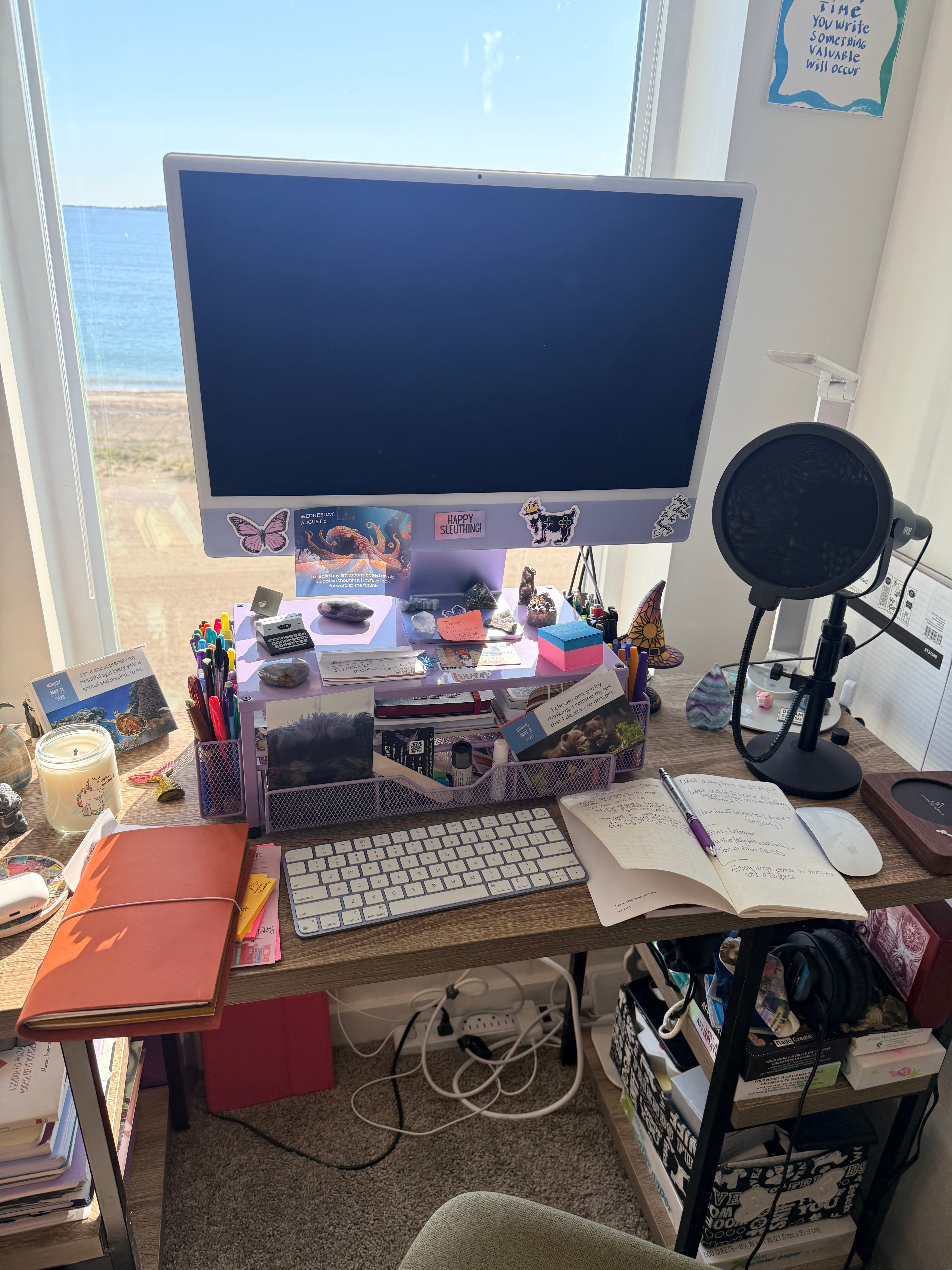
Here’s what I’ve learned about writing multiple projects that nobody tells you:
They don’t actually compete with each other as much as you’d think.
Different projects live in different registers. The suspense novel requires a particular kind of focused, analytical thinking — plot mechanics, cause and effect, building dread. The memoir requires excavation — going inward, being honest, sitting with discomfort. The Harlequin rewrite runs on momentum and instinct and a lot of words that have already been written and now need shaping and tweaking into something new.
Those are genuinely different parts of my brain. Switching between them isn’t always draining. Sometimes it’s clarifying. Sometimes working on the memoir shakes something loose in the suspense novel. Sometimes the distance I get from stepping away from one story is exactly what I needed to see it clearly.
What does compete — and this is the real issue, the one the productivity debate usually skips — is time. Not creative energy. Time.
You can write three books simultaneously if you have three protected slots of time. Most writers don’t have one protected slot of time. That’s the actual problem. Not the number of projects — the number of unprotected hours.
So if you’re someone who wants to work on multiple projects and people keep telling you to focus on one thing: the question isn’t whether your brain can handle multiple stories. It probably can. The question is whether your schedule can.
If the answer is no — protect one slot first. Make it non-negotiable. Then, when that slot is solid and consistent, see if there’s room for another.
That’s not a compromise. That’s just honest sequencing.
As for me — I’ll keep you posted on all three.
The suspense novel is getting clearer in the notebook. The memoir is showing up every Thursday whether I feel ready or not. And the Harlequin Intrigue rewrite is moving forward on faith and momentum and the quiet certainty that the manuscript is going to land where it’s supposed to.
That’s the writing life right now. Three books, three registers, three versions of my writer brain — all of them showing up for the work.
See you Thursday, paid subscribers. The memoir continues.
I've felt how different projects work different parts of one's mind.
BTW, writing about writing is useful. Were you at the Crime Bake where Sue Grafton was the GoH? My memory of that is hazier than I'd like--a long freakin' time ago--but she talked about her notebooks in which she conversed with her Shadow about the WIP.